
- BSI Standard 200-4 describes Business Continuity Management as a management responsibility and is aligned with ISO 22301:2019 for organizational resilience.
- The Business Impact Analysis (BIA) identifies critical processes, dependencies, and recovery times as the basis for emergency plans and crisis organization.
- Honicon integrates BCM directly into digitized end-to-end processes instead of isolated specialist systems—using Atlassian tools or Plane.
- Jira, Confluence & Assets map emergency organization, reporting paths, recovery plans, and dependencies—for sustainable BCM operations in the public sector.
In the day-to-day operations of public administrations and municipal enterprises, reliability, clear processes, and transparent decision-making are essential. Nevertheless, not every day goes according to plan: applications may be temporarily unavailable, buildings or networks may require short-term attention, and individual steps may stall. BSI Standard 200-4 addresses precisely these situations and describes how organizations can structure their critical processes so that they remain operational during disruptions or can resume operations at a defined minimum level within an appropriate timeframe after an interruption. At its core is the question of how municipalities can reliably and transparently fulfill their mandate—even when conditions change at short notice.
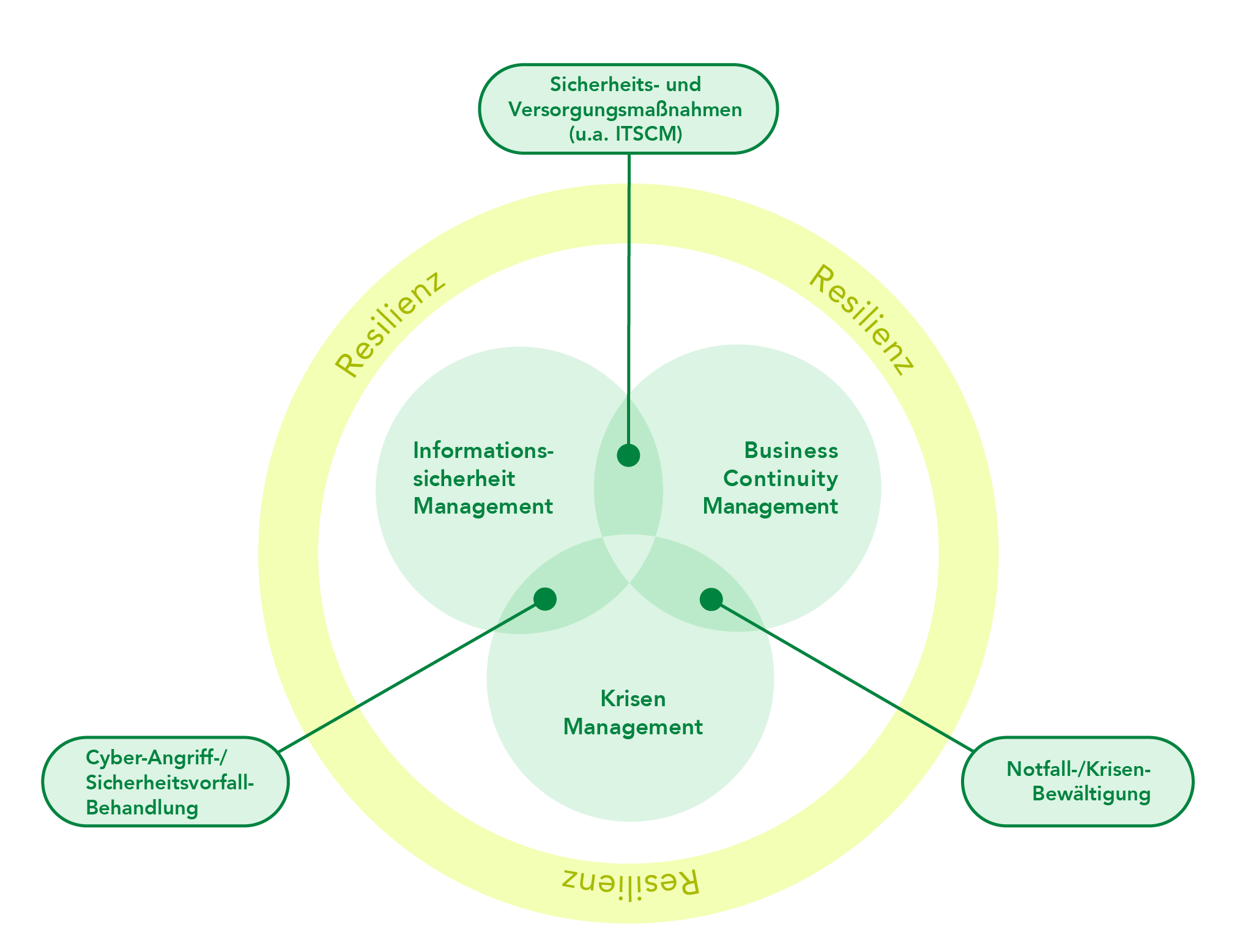
The standard defines Business Continuity Management as a management responsibility. The objective: organizational resilience. Institutions are expected to identify risks and opportunities arising from change at an early stage, assess impacts, and respond flexibly. The focus is not solely on technical infrastructure, but on the interaction between organization, technology, facilities, and personnel. Only this interplay provides resilience in a crisis.
Mission and structure of BSI Standard 200-4
BSI Standard 200-4 describes a complete BCM in accordance with the requirements of ISO 22301:2019. Alignment with this standard ensures compatibility with other management systems. At the same time, the standard structures the entry through a maturity-based model. Organizations with limited resources can start at an introductory level, expand the scope step by step, and gradually progress toward comprehensive BCM.
At its core is the task of maintaining business processes despite severe disruptions or restoring them to a minimum defined level within a specified time after an interruption. This includes organizational rules, technical precautions, structural protective measures, and personnel arrangements. Emergency manuals, alternate workplaces, recovery plans, emergency operating procedures, roles within the crisis organization, and exercises all interlock.
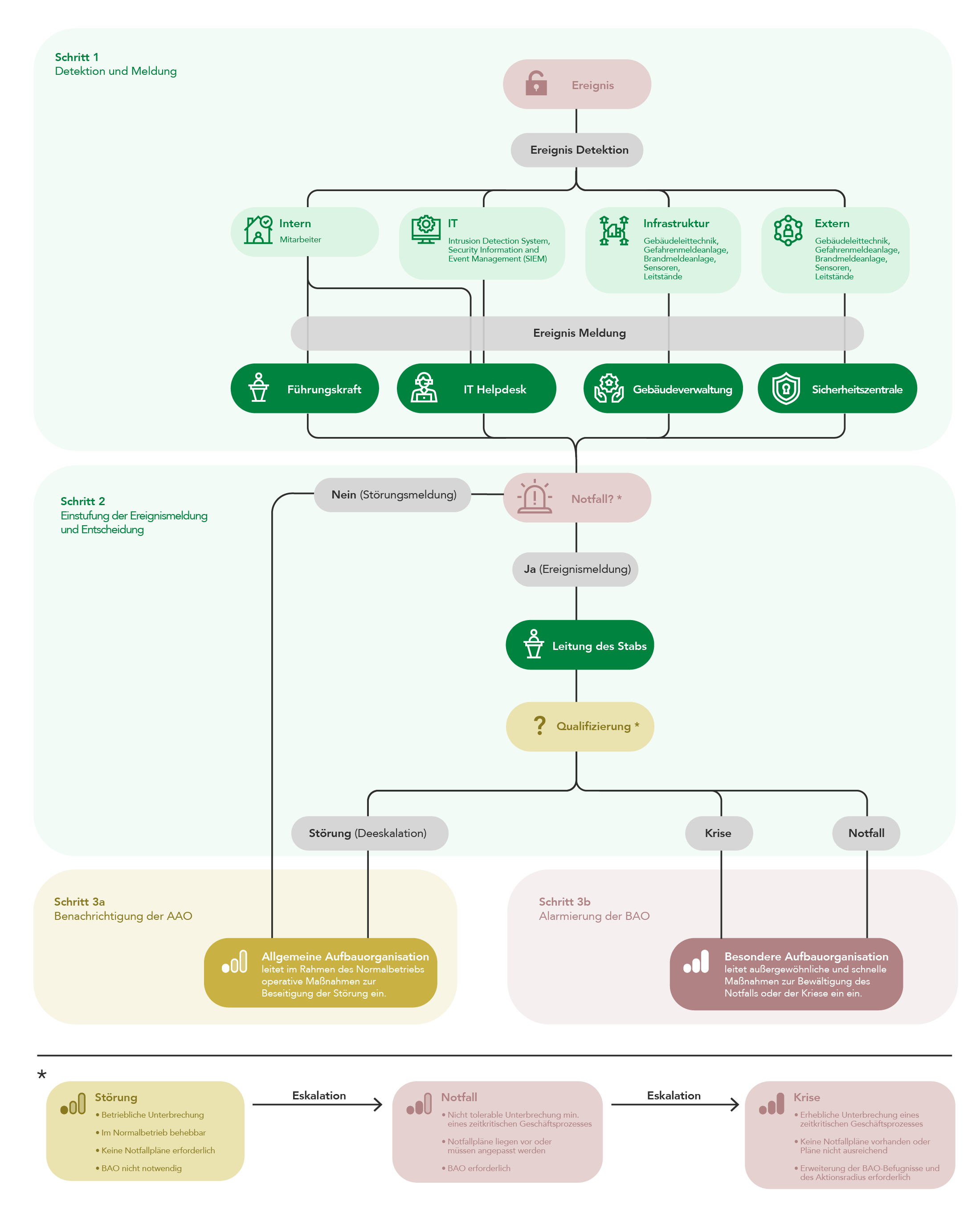
The standard describes the progression from disruption to emergency and crisis. A disruption affects operations but remains manageable. Emergencies and crises represent situations of significantly greater impact. In these circumstances, BCM takes effect. Processes receive a dedicated structure, responsibilities shift, and priorities change. The aim is to limit loss of time, contain damage, and ensure the delivery of critical services.
The PDCA cycle also plays a central role in the BCM context. Plan, Do, Check, Act—this rhythm shapes the establishment and operation of the management system. Strategy, emergency concepts, exercises, evaluations, and improvement measures are directly connected. A one-time approved emergency manual is therefore not sufficient. Structures must remain dynamic.
Business Impact Analysis and resilience
A key instrument in BSI Standard 200-4 is the Business Impact Analysis (BIA). It does not place technical components at the forefront, but rather the impacts on tasks, products, and services. Departments describe the consequences of outages of varying duration, existing dependencies, and which processes have the highest priority. This creates an overall picture that serves as a decision-making basis for top management.
From the Business Impact Analysis, the organization derives requirements for recovery times, emergency operating capacities, communication obligations, and minimum resources. These requirements are later reflected in emergency plans and recovery scenarios. Resilience does not arise by chance; it is the result of deliberate decisions.
The higher the maturity level of a BCM, the better an organization can deal with change. New technologies, legislative changes, evolving threat scenarios, structural reforms: institutions with robust BCM recognize the implications of such developments more quickly, structure their responses, seize opportunities, and limit damage. In this context, resilience does not mean rigid toughness, but orderly adaptability.
An information security management system in accordance with BSI Standard 200-1 or ISO/IEC 27001 provides a useful complement, but is not considered a mandatory prerequisite. BSI Standard 200-4 allows the establishment of BCM even without an existing ISMS. Where an ISMS is already in place, however, close integration appears appropriate—for example in risk assessments, training concepts, and audit structures.
Honicon : processes, Atlassian tools, and BCM
Honicon is a small IT consulting firm with its roots in process consulting. At the core is the ambition to take a holistic view of an organization’s business processes, analyze them, model them, and consistently digitize them. The particular strength lies in not merely adding information security management—and especially Business Continuity Management—after the fact, but in integrating and firmly embedding them from the outset within these digitized processes. This approach applies both to solutions based on Jira, Confluence, Assets, and other tools from the Atlassian ecosystem, as well as to implementations using systems from the Plane family. What matters most to Honicon is that BCM and ISMS do not become another isolated specialist system, but instead form an integral part of end-to-end digitized processes. The team includes trained professionals certified as external information security officers. Projects with authorities, counties, municipal enterprises, and other public-sector entities shape the company’s profile.
From this perspective, the process nature of BCM comes to the fore. BSI Standard 200-4 defines clear phases, roles, and documents. Honicon translates these requirements into workflows that integrate seamlessly into an administration’s existing structures. Emergency organization, reporting paths, recovery steps, post-incident processes: all of this is shaped to comply with applicable requirements while remaining efficient. By embedding BCM and ISMS into digitized end-to-end processes, solutions emerge that are used in day-to-day operations rather than existing only on paper—regardless of whether the technical foundation is based on Atlassian tools or Plane.
In this context, Jira is well suited as a management and control instrument. Emergency exercises, measures derived from lessons learned, maintenance of emergency plans, implementation tasks from management reviews, and audits are all handled there in structured issues. Responsibilities, deadlines, and statuses are transparent. Confluence provides the foundation for emergency manuals, profiles of critical processes, workflow diagrams, and documentation of exercises. Versioning and permission concepts ensure integrity and traceability. Comparable structures can also be implemented in Plane-based environments, ensuring that BCM governance and documentation remain consistently embedded in the existing tool landscape.
Assets supports the modeling of dependencies. Critical applications, servers, locations, communication paths, and service providers are linked to the processes identified in the Business Impact Analysis. If a location fails, the asset structure shows which services are affected. In the event of a disruption in a data center, the object structure reveals which specialist applications, organizational units, and communication channels come under pressure.
Honicon places strong emphasis on integration. A BCM in accordance with BSI Standard 200-4 is not created as a separate project with its own system stack, but as part of the familiar tool and process landscape. Where Jira already manages tickets for incidents and changes, or Plane is used for task and project management, using these tools for emergency processes is a natural extension. Where Confluence supports professional documentation, a dedicated area for BCM evidence is an obvious choice. In this way, BCM remains visible and tangible instead of disappearing into an isolated specialist tool, and the ISMS becomes a natural component of digitized business processes.
BCM as a permanent responsibility in the public sector
BSI Standard 200-4 emphasizes the ongoing nature of BCM. Developing an emergency concept is only the beginning. Exercises, evaluations, adjustments, training of new staff, and the integration of new technologies continue over time. Changes in the environment—such as NIS 2, KRITIS regulations, or new legal requirements—also affect business continuity structures.
Authorities and other public-sector organizations face the task of not merely citing this standard, but translating it into their own reality. Business continuity officers, management, crisis teams, IT, specialist departments, and external service providers require a shared approach. Honicon contributes experience from projects with public institutions, knowledge of the specific framework conditions, and the ability to implement process models using Atlassian tools.
The result is a BCM that meets the requirements of BSI Standard 200-4, strengthens resilience, and at the same time integrates into existing structures—not as a foreign element, but as a fixed component of a capable and digitally oriented public administration.